
How to Increase Patient Satisfaction in an Aesthetic Clinic: 8 Golden Rules
For an aesthetic clinic patient, the experience starts long before the clinic door. A results photo seen on Instagram, a DM sent late at night, a reminder message received the day before the appointment: each of these shapes that patient’s trust in the clinic. No matter how good the treatment result is, the experience before and after it is the real determinant of satisfaction.
22 May 20268 min read

In this article
- Why Is Patient Satisfaction More Critical in Aesthetic Clinics?
- 1. Don’t Leave the First Contact Unanswered
- 2. Don’t Make the Patient Introduce Themselves Every Time
- 3. Remind Them of the Appointment, and Tell Them How to Prepare
- 4. Leave Session Tracking to the System, Don’t Make the Patient Do the Following Up
- 5. Keep the Before/After Archive Organized: Make Trust Visible
- 6. Keep the Calendar Error-Free: A Double Booking Ruins the Patient Experience Instantly
- 7. Catch Feedback, Don’t Miss Complaints
- 8. Win Back the Patient You Lost
- Patient Satisfaction Is Built With a System, Not a Single Action
- Frequently asked questions
- Satisfaction Is Not a Result, It Is the Output of a System
Patient satisfaction may look like an abstract concept, but it is the direct result of concrete operational decisions. How quickly a message is answered, whether the appointment is reminded, whether the next session is planned automatically: all of these are variables that directly affect the patient experience and can be managed systematically.
In this article we describe the 8 golden rules that increase patient satisfaction in aesthetic clinic management, and how Flextell makes each of them practical.
Why Is Patient Satisfaction More Critical in Aesthetic Clinics?
In aesthetic clinics, the patient relationship does not end with a single visit. Laser hair removal requires six to eight sessions, botox is renewed every few months, and skin care protocols are kept up at regular intervals. This structure means that every satisfied patient becomes a long-term source of revenue, and that every disappointment affects both that patient and the people around them.
On top of that, aesthetic clinic patients are active on social media. A satisfied patient promotes the clinic organically; a dissatisfied one shares their experience with a much wider circle. In this equation, patient satisfaction is not only an ethical responsibility but a business strategy that directly determines growth.
1. Don’t Leave the First Contact Unanswered
The moment an aesthetic clinic patient decides to book an appointment most likely falls outside business hours. A potential patient who DMs after seeing a piece of content on Instagram in the evening may not be ready to wait until morning; they may be writing to another clinic’s profile at the same time.
A first message that goes unanswered means the patient experience is interrupted before it even starts.
Flextell’s AI assistant closes this gap. It receives messages arriving through WhatsApp, Instagram DM and Telegram at every hour of the day; it understands the intent, offers available times and, once the patient confirms, saves the appointment to the calendar. When staff arrive in the morning, instead of a pile of unanswered messages they find a list of processed appointments.
Curious how a 24/7 automatic patient reply system works? You can find our detailed guide here.
2. Don’t Make the Patient Introduce Themselves Every Time
If a patient coming to the same clinic for the third time has to explain their name, phone number and which treatment they had all over again, the experience makes them feel the clinic does not care about them.
In Flextell, when you create a new appointment, the system brings up the patient’s whole card the moment the name is typed. Notes from the previous session, treatments applied, products used and special information are ready on the same screen. Staff do not need to open a separate tab or ask the patient again; the patient is recognized before even walking into the clinic.
This simple-looking feature creates a deep sense of trust in the patient experience.
Want to discover all the features of a patient tracking program? You can find our detailed guide here.
3. Remind Them of the Appointment, and Tell Them How to Prepare
Patients can forget their appointments. This is true for every clinic, but in aesthetic clinics skipping a session affects not only that day’s revenue but also the effectiveness of the treatment. A patient who skips a laser hair removal session gets less result from the treatment as a whole, which hurts both patient satisfaction and the clinic’s reputation.
In Flextell, the automatic reminder flow starts the moment an appointment is confirmed. Messages go to the patient at intervals the clinic sets, for example three days and twenty-four hours before the appointment. Treatment-specific preparation information can be added to these messages too: notes such as no waxing before a laser session, no blood-thinning medication before a filler, or coming to a skin care session without makeup go into the message automatically.
The patient is both reminded and comes prepared. This combination lowers the no-show rate and directly improves the patient experience as well.
Curious how a reminder system is set up to lower the no-show rate? You can find our guide to patient appointment reminder systems here.
4. Leave Session Tracking to the System, Don’t Make the Patient Do the Following Up
Having staff ask “When would you like your next session?” every time takes time and is easy to forget. A more critical problem is that the patient has to wait for this question; if patients feel they have to keep track of the time between sessions themselves, it becomes a source of annoyance.
Flextell’s session plan module takes this responsibility onto the system. Each treatment is given a number of sessions and a session interval. When a session is completed, Flextell calculates the suitable date range for the next one and sends the patient an automatic session confirmation message. When the patient confirms, the appointment is added to the calendar; staff do not need to take any extra step.
The patient does not have to call the clinic or send a message for their next appointment. The system manages them according to their own protocol.
Curious how multi-session treatment tracking works? You can find our detailed guide to clinic treatment and session plan management here.
5. Keep the Before/After Archive Organized: Make Trust Visible
In aesthetic treatments the result is visual. For the patient, one of the strongest signs of satisfaction is being able to see their before and after side by side. This visual comparison both makes the treatment’s effectiveness concrete and strengthens trust in the clinic.
In Flextell, you can upload photos to the patient card and link them to the relevant appointment. Before and after images are recorded with a date stamp; as sessions go on, the visual course of the treatment builds up on the patient card as a chronological archive.
This archive creates two kinds of value for the clinic. First, it lets you show the patient the effect of the treatment in concrete terms, a tool that strengthens the trust relationship and supports the decision to book again. Second, in case of a possible objection or complaint, it serves as a safeguard documenting the condition before the procedure.
6. Keep the Calendar Error-Free: A Double Booking Ruins the Patient Experience Instantly
A patient arriving at the clinic and hearing “We booked two appointments for the same time, please wait a moment” overshadows even the best treatment result. A calendar error may look like a small operational problem, but from the patient’s point of view it is a concrete sign that the clinic does not take them seriously.
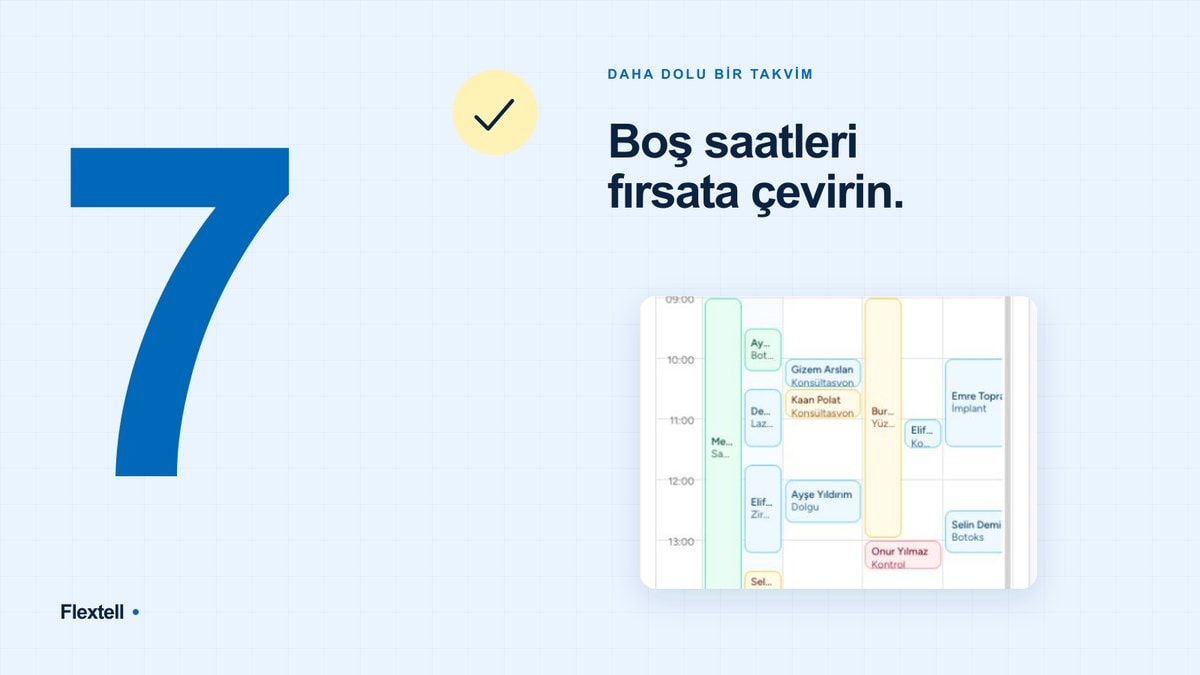
In Flextell, entering a second appointment into an occupied hour is technically not possible. This check works equally for manual entries made from the panel and for automatic appointments booked through the AI assistant. An hour blocked on the doctor’s Google Calendar or Outlook calendar is reflected in Flextell too; that hour is not shown as available.
When the patient arrives at the clinic, being received at the hour they expect is one of the most basic conditions of satisfaction.
Curious about all the features of clinic calendar management? You can find our detailed guide here.
7. Catch Feedback, Don’t Miss Complaints
A dissatisfied patient does not always say so. Often they quietly leave and never come back. They may even post about it on social media. The moment a complaint is voiced is in fact the moment the clinic gets the chance to win that patient back.
In Flextell, the AI assistant can automatically detect messages in patient conversations that should open a support request. Messages containing a complaint, a side-effect report, a suggestion or dissatisfaction are recorded in a separate module in the system and a notification is sent to staff. This way, no patient feedback goes unrecorded.
Not missing a complaint is as important as resolving it. A complaint that is addressed in time often turns into a loyal patient.
8. Win Back the Patient You Lost
A patient who cancelled their appointment or skipped their next session is not a permanently lost patient; but if no action is taken, they can become one.
In Flextell, an automatic follow-up message can be sent to a patient whose appointment was cancelled after a certain period. This message invites the patient back and makes it easy to book the next appointment. The content and timing of the message are customized according to the clinic’s preference.
This mechanism is especially valuable in aesthetic clinics. A patient who skips a laser hair removal session loses the effectiveness of the treatment, which is a bad ending for both the patient and the clinic. A message sent in time closes this gap and produces the right outcome for both the patient’s health and the clinic relationship.
Patient Satisfaction Is Built With a System, Not a Single Action
What these eight rules have in common is that none of them means much on its own. Answering quickly on first contact but forgetting session tracking, or keeping the before/after archive organized but not reminding the appointment: each leaves a gap in the experience.
Patient satisfaction emerges when all of these points work together. In Flextell, these eight rules run on a single platform as integrated modules. 24/7 message handling, the patient card, automatic reminders, the session plan, the before/after archive, conflict prevention, feedback management and win-back messages are all parts of the same system.
As the clinic grows and the number of patients increases, this wholeness becomes even more critical. Every small step that has to be managed without a system consumes a staff member’s time and attention. With a system, most of these steps run automatically, and staff focus on the real patient experience.
Frequently asked questions
What kind of data can be used in Flextell to measure patient satisfaction?
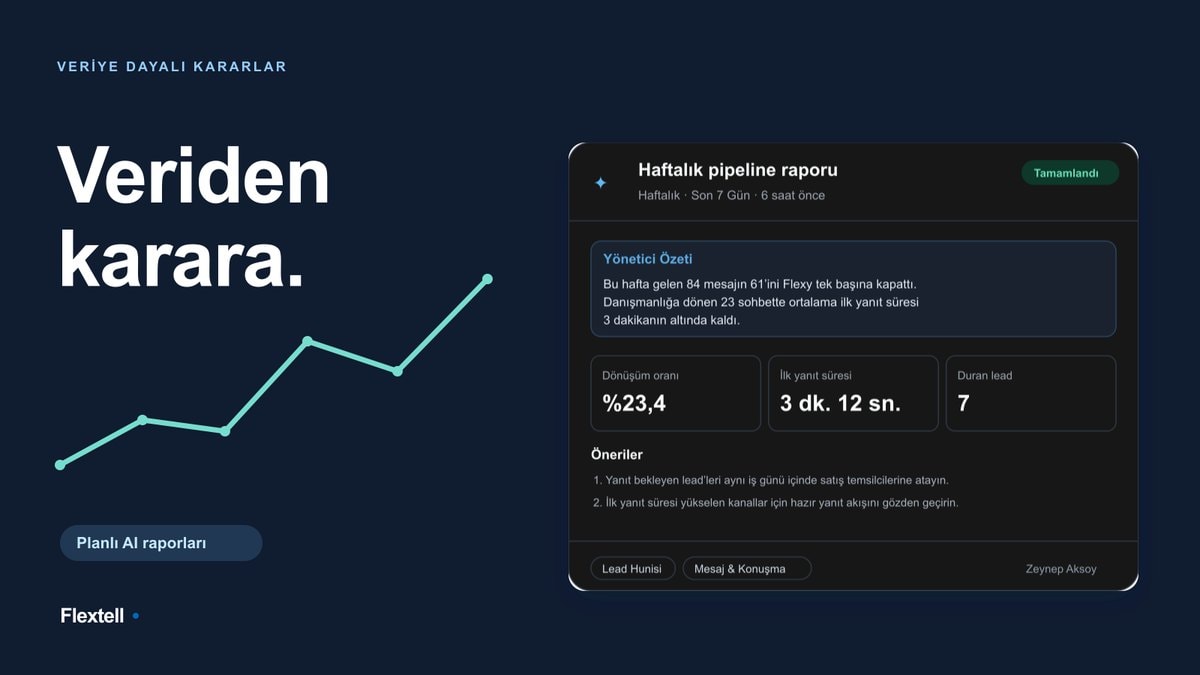
Flextell’s reporting module automatically compiles metrics such as no-show rate, repeat booking frequency, distribution of cancelled appointments and session completion rates. This data is an indirect indicator of patient satisfaction; these analyses show for which treatments and in which time slots problems occur.
How does the AI assistant detect messages containing complaints?
Flextell’s AI assistant can evaluate the content and tone of a message and automatically determine the cases where a support request should be opened. These messages are recorded in a separate module and a notification is sent to staff; no complaint goes unanswered.
How are before/after photos added to the patient card?
In Flextell, uploading a photo to the patient card takes a few clicks. The photo is linked to the relevant appointment and saved with a date stamp. As sessions go on, the visual archive builds up automatically and can be viewed in chronological order.
How is preparation information added to the session reminder message?
When a treatment is defined, preparation notes specific to each treatment are entered into the system. When the reminder message is sent, these notes are added to the message automatically. Which information is sent for which treatment is customized according to the clinic’s preference.
How is automatic messaging to a patient who cancelled set up?
In Flextell, the flow can be defined so that an automatic follow-up message is sent to a patient whose appointment was cancelled after a certain period. The timing and content of the message are set by the clinic; the assistant applies this rule automatically for every cancellation.
Does Flextell offer all these features for a small aesthetic clinic too?
Yes. All of these features can be used in clinics made up of a single doctor and an assistant as well. The AI assistant handles after-hours communication without extra staff; session tracking, reminders and win-back messages are managed automatically. The platform is designed to scale as the clinic grows.
Satisfaction Is Not a Result, It Is the Output of a System
In an aesthetic clinic, patient satisfaction is not the natural extension of a good treatment. Alongside the treatment result, the quality of communication, the reliability of processes and the patient feeling valued all come together to build satisfaction.
In Flextell, each of these factors is supported by the system. 24/7 message handling, patient card history, automatic reminders, session tracking flows, the before/after archive, conflict-free calendar management and win-back messages all work as connected modules on the same platform.
If you want to see how your clinic could change, you can request a demo or start a free trial right away.
This content was prepared by the Flextell team. Last updated: April 2026.